Dental Implants vs. Bridges: Long-Term Health and Cost Comparison
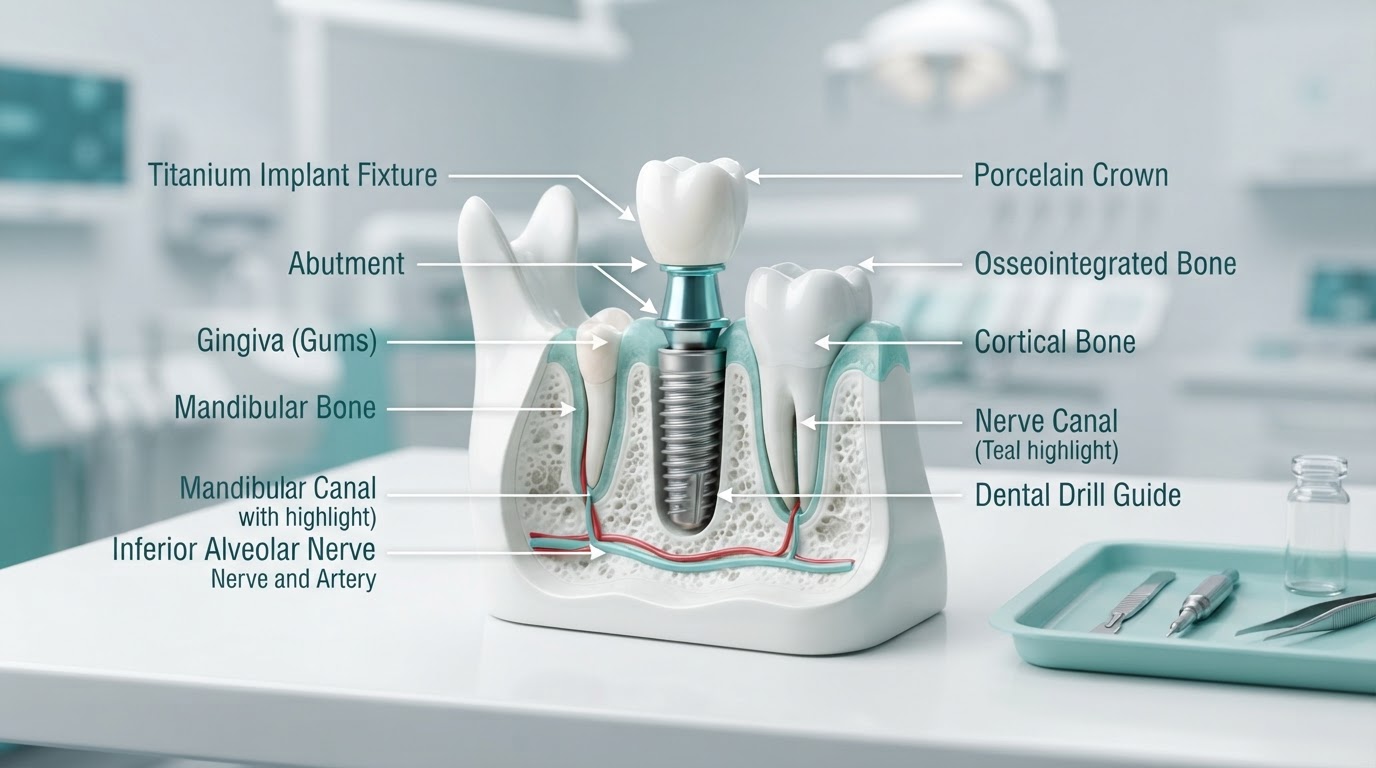
Losing a natural tooth affects more than just your smile. Over time, the absence of root stimulation causes the alveolar jawbone to resorb, leading to facial sagging and adjacent teeth drifting out of alignment.
Traditional bridges require shaving down two completely healthy neighboring teeth to act as anchor crowns. In contrast, a dental implant acts as an independent titanium artificial root, leaving your natural healthy teeth 100% untouched.
Longevity factor: Traditional bridges typically require replacement every 10 to 12 years due to recurrent decay under the crowns. Dental implants boast a 98% 25-year survival rate, making them by far the most economical choice over a lifetime.
Natural biting force: With an implant integrated into the jawbone, you can chew steak, crisp apples, and crunchy snacks with 100% of your original bite power without slippage or discomfort.
Have questions about this treatment?
Our clinical team is always available to review your individual smile goals during a relaxed, comprehensive consultation.